


Why Domestic LPG?
For homes not connected to the mains natural gas network, LPG offers the closest equivalent experience - the same responsive, convenient gas flame for central heating, cooking and hot water, delivered to a tank on your property rather than through a pipeline. LPG burns cleanly and efficiently, making it one of the most environmentally preferable fossil fuels currently available for off-grid heating.
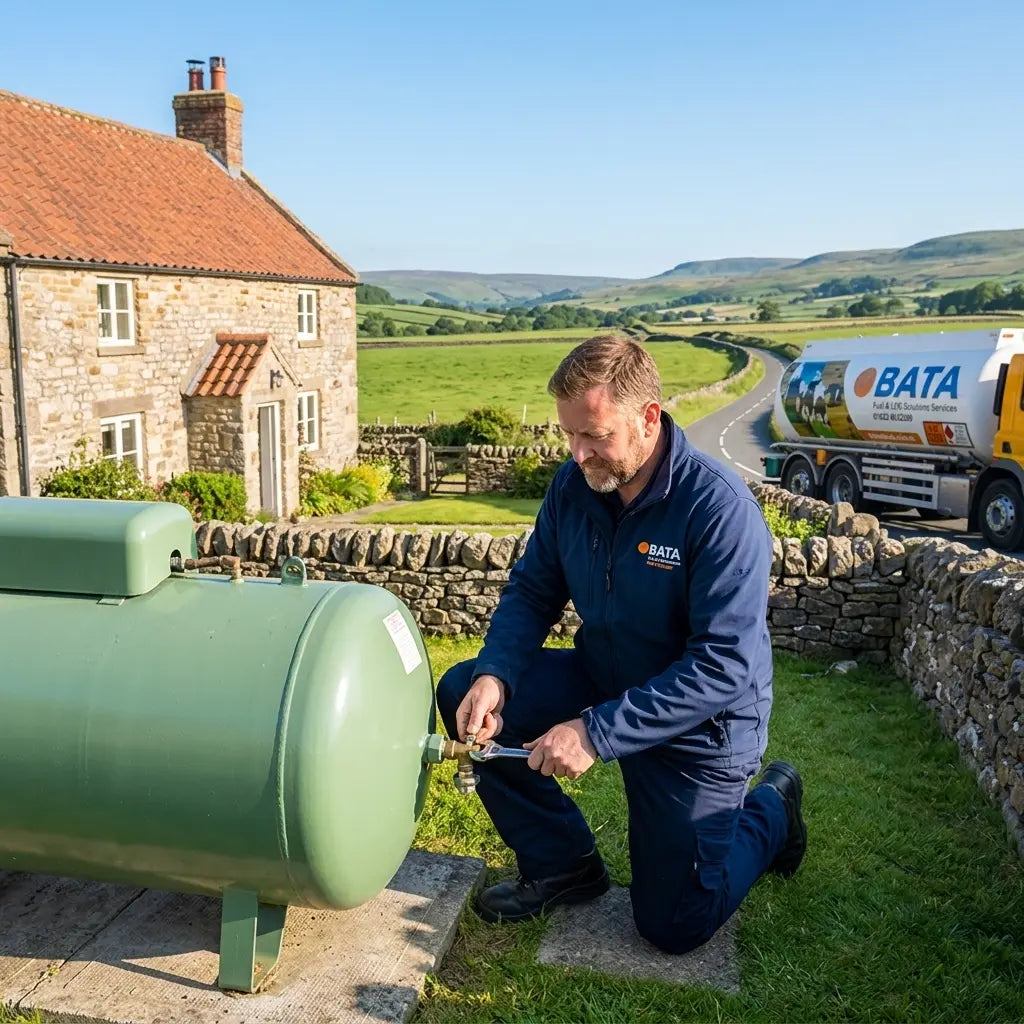
A Complete Service
BATA supplies domestic LPG by tanker to a storage tank at your property. Once installed, your LPG system works just like mains gas, powering your boiler, hob, oven or fire. Instead of a mains gas bill, you order LPG or use our automatic top-up service, with gas stored in your tank.
Our automatic top-up service monitors your tank level remotely and arranges deliveries before you run low. With our mini-tankers, we can also deliver to remote properties across the dales, moors and wolds of North Yorkshire.
Why Choose BATA?
With free tank installation, automatic monitoring that takes the worry off your hands, and reliable delivery to even the most remote Yorkshire properties, BATA makes off-grid LPG as convenient as mains gas.

Payment Choice
Choose how you pay - on delivery, direct debit, or a budget payment plan that spreads your annual gas cost across monthly payments.
FAQs
How does domestic LPG work - how is the gas stored and delivered?
How does domestic LPG work - how is the gas stored and delivered?
LPG is stored as a liquid under pressure in a steel tank installed at your property - either above-ground or underground. As gas is drawn off at the top, the liquid vaporises and travels through a regulator that reduces the pressure to safe operating levels before entering your property's gas pipework. Your boiler, hob, fire and other appliances then operate exactly as they would on mains gas. BATA refills your tank by connecting a tanker to the fill point and pumping in fresh LPG under pressure.
What size LPG tank do I need for a domestic property?
What size LPG tank do I need for a domestic property?
Tank size depends on your property size, insulation level, number of occupants, and the appliances connected to LPG. For a typical detached house using LPG for heating, hot water and cooking, a 1,000-litre (47kg equivalent) bulk tank is often the starting point, while larger properties with higher consumption may need a 1,700–2,700 litre tank. BATA will assess your requirements during a free site visit and recommend the appropriate tank size and location before any installation.
Is LPG safe to have at home?
Is LPG safe to have at home?
Yes - LPG has an excellent safety record when properly installed and maintained. It is stored in tanks designed and tested to rigorous international standards. LPG is heavier than air, so in the event of a leak it disperses at low level rather than accumulating overhead. Tanks installed by BATA conform to all UKLPG Codes of Practice, are installed at required safety distances from buildings and boundaries, and are fitted with safety relief valves. Our Gas Safe registered engineers ensure all pipework and appliances are correctly installed and leak-tested.
Can I switch from oil heating to LPG?
Can I switch from oil heating to LPG?
Yes - many homeowners switch from oil to LPG for a variety of reasons including appliance preference, reliability, or the availability of modern condensing LPG boilers. A fuel conversion involves replacing your boiler with an LPG-compatible unit, installing an LPG storage tank, and converting or replacing your burner. Our heating engineers can survey your existing system and advise on the most cost-effective conversion approach. Contact us to discuss whether a fuel switch makes sense for your property and lifestyle.
What happens if I want to change gas supplier?
What happens if I want to change gas supplier?
If you have a tank installed by BATA and wish to change supplier, contact our fuel team to discuss your options. Supply agreements typically have a minimum term and notice provisions. If you decide to change, the outgoing supplier's tank will need to be removed and a new tank installed by your new supplier - this involves some inconvenience and potentially some cost depending on the terms of your agreement. Many customers find that the combination of BATA's local service, competitive pricing and reliable delivery removes the need to change.